
Two poker sites can offer similar games and stakes but feel completely different once the tables open. One client responds instantly, keeps important controls within reach and makes switching between tables simple. Another may feel cluttered, slow or unnecessarily complicated.
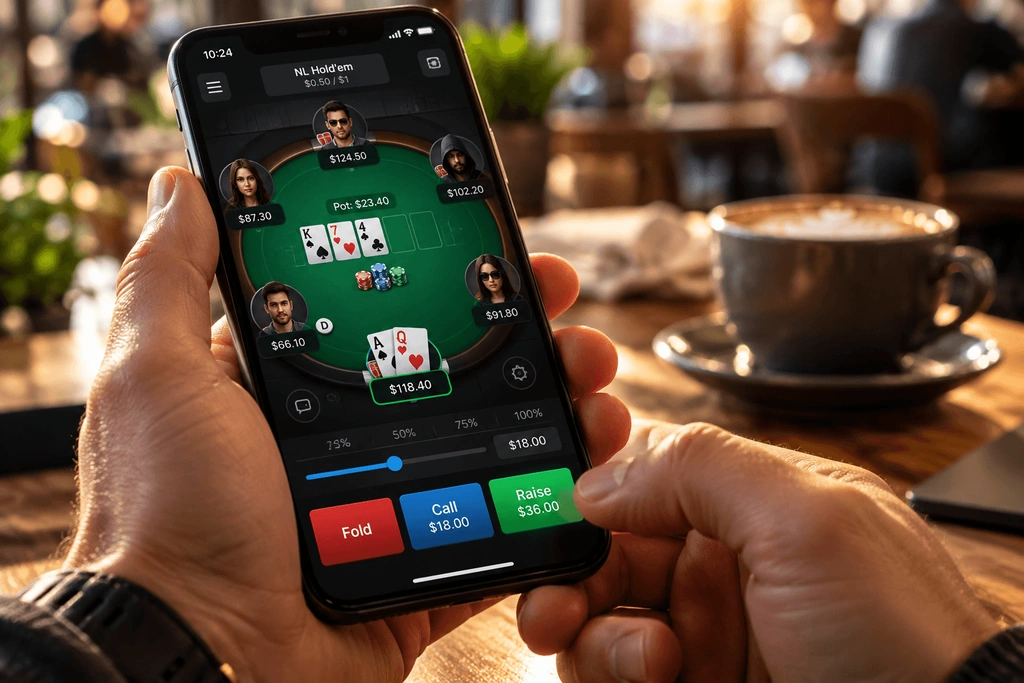
That is why online poker software deserves attention when comparing platforms. Players may spend hours inside the client, so small differences in navigation, stability and table design can have a noticeable effect on the experience. A good poker client does not need dozens of unusual functions. It needs to make the essential ones work reliably.
A Clear Poker Site Interface Comes First
The poker site interface is what players interact with throughout a session. Cards, chip stacks, bet controls and player positions should be easy to understand without forcing the user to search around the screen.
At the table, the most important actions are simple: check, call, fold and raise. These controls should remain visible and clearly separated, especially when a decision has to be made within a limited time.
Visual design also matters. Animations can make a client feel polished, but too much movement may become distracting during longer sessions. The table should keep attention on the game rather than on decorative elements.
The lobby deserves the same consideration. Players should be able to find cash games, tournaments and preferred stakes without moving through several unnecessary menus.
Performance Matters During Real Play
A nice-looking interface doesn’t count for much if the software freezes once you open a few tables. Stability is one of the most important poker software features, especially if you play long sessions.
The client should respond the same way every time, whether you’re changing a bet size, opening another table or jumping between the lobby and a live game. Slow loading or laggy controls get annoying fast.
Connection handling is also important. Internet problems can happen regardless of the platform, but the software should communicate clearly when a connection is interrupted and attempt to reconnect without unnecessary steps.
Updates should improve the client without regularly introducing new performance problems.
The Features That Make a Difference
Different players value different tools, but several features can affect everyday use.
| Feature | Why it matters |
| Table resizing | Helps players organize one or several games |
| Bet controls | Makes common bet sizes easier to select |
| Game filters | Reduces time spent searching through the lobby |
| Hand history | Allows previous hands to be reviewed |
| Notes | Helps record observations about opponents |
| Mobile support | Makes it possible to play away from a desktop |
Not every player needs every option. Someone who plays one table occasionally may care more about simplicity, while a regular multi-table player may place greater value on window management and customizable controls.
The best poker client is therefore not necessarily the one with the longest feature list. What matters is whether those features make the software easier to use.
Desktop and Mobile Clients Serve Different Needs
Desktop poker software has more screen space available for detailed lobbies, multiple tables and additional information. Mobile apps have to fit the same basic actions onto a much smaller display.
A well-designed mobile client should not simply shrink the desktop version. Buttons need to remain large enough to use comfortably, cards and chip amounts should be readable, and moving between the table and lobby should require as few steps as possible.
Portrait and landscape modes can also affect usability. Some players prefer holding a phone vertically, while others find a horizontal table easier to read.
When making an online poker platform comparison, it is therefore worth checking desktop and mobile versions separately rather than assuming they provide an identical experience.
Multi-Table Play Can Reveal Software Weaknesses
A poker client may work perfectly with one table open but become much less convenient when a player adds a second or third.
Tables need to resize properly without hiding important information. When you’re running several tables, notifications need to make it obvious which one is waiting on you, and switching between games shouldn’t lag.
More tables isn’t always better, though. You’re making more decisions in less time, and each hand gets less of your attention. Good software can make multi-tabling manageable, but you’re the one who has to decide how many games you can actually keep up with.
Test the Software Before Choosing a Poker Site
When choosing a poker site, software is just one piece of the puzzle. Game selection, stakes, payment options, account security and the site’s rules all count too.
Still, it pays to try the client before you put real time into it, because screenshots don’t show much. Open a few tables and see how fast they load, whether the lobby filters actually help, and whether the bet controls feel natural.
It is also worth looking at customization. Some players prefer four-color decks, specific table layouts or reduced animations. Others want a clean default setup and never change it.
Resources such as BC Poker can provide additional information about online poker platforms and game-related topics, while current software availability and features should be confirmed with the relevant operator.
What a Poker Software Review Should Consider
A useful poker software review should go beyond saying that a client looks modern or outdated. Appearance is subjective and reveals little about how the platform performs during an actual session.
A better evaluation considers several questions. Does the client remain stable over time? Are tables and tournaments easy to find? Can important information be read quickly? Does the mobile version preserve the essential functions of the desktop client?
Reviews should also distinguish between genuine software limitations and personal preferences. A player who dislikes animations may prefer a minimal interface, while someone else may enjoy the same visual effects.
The goal is not to identify one design that suits everyone, but to understand how well the client handles common poker tasks.
Simple Software Can Be Better Software
Feature-heavy software can look impressive on a comparison page, but additional tools do not always improve the experience. Every extra menu, button or animation adds another element competing for attention.
For many players, good design means that the software becomes almost invisible during play. They can find a game, take a seat, choose an action and review basic information without thinking about how the interface works.
This is particularly important for beginners, who are already processing rules, hand strength, position and betting decisions. A complicated client adds another layer to learn.
Final Thoughts
Forget the feature list. The best online poker software is the kind that doesn’t crash, loads quickly and lets you read the table and bet without hunting for buttons. Once you’re deep in a session, nobody cares about the animations.
What works also depends on how you play. Someone on a phone, a desktop regular and a person grinding four tables at once all want different things. So try the client for a while before you settle in. If you forget the interface is even there and just think about the game, it’s a good one.