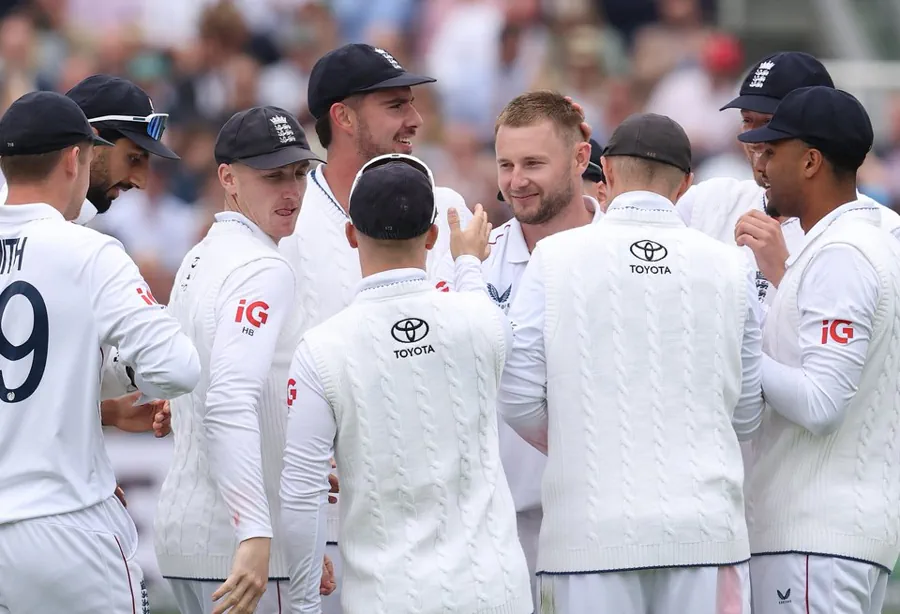
You know, there’s something about cricket that completely baffles anyone used to the rapid-fire pace of football or basketball. It’s a game of phrases, of endless waiting, and then-sudden, sharp bursts of adrenaline that hit you exactly when you were about to doze off to the monotonous hum of the crowd. If I’m being honest, to an outsider, it looks like a strange picnic for gentlemen in white who decided to stretch a questionable pleasure over several days. But the moment you dig a little deeper, you realize this isn’t just a sport. It’s a complex, almost sacred geometry of human patience.

The Physics of the Pitch
The center of this entire universe is the pitch. That narrow strip of earth becomes a literal battlefield map by the third or fourth day of a match. The cracks in the dirt aren’t just soil defects; they are traps that a bowler tries to exploit to make the ball do unthinkable things. And this is where the real magic starts. The ball in cricket is a treacherous thing. It’s heavy, hard, and encased in leather that changes its personality as the hours go by. Bowlers are fanatics; they’ll spend hours rubbing one side of the ball against their trousers just to create a difference in aerodynamics. Essentially, they are practicing applied physics in field conditions. When one side becomes mirror-smooth and the other stays rough, the ball begins to “swing”-veering through the air in an arc that shatters the batsman’s calculations.
The Loneliness of the Crease
In practice, it feels like a duel in a Western, only stretched out over hours. The batsman stands there, alone against everyone, with that willow bat in his hands. He has no room for error. In football, you can miss the goal ten times and still be the hero on the eleventh try. In cricket, if you miss a delivery and the ball takes out your stumps-that’s it. Your journey is over; go to the dressing room and think about your life. It’s a colossal psychological weight. Sometimes I look at the face of a player who has spent five hours on the field, facing hundreds of deliveries in forty-degree heat somewhere like Chennai, and I see more than just exhaustion. I see a kind of existential void – https://dk88casino-my.com/ – it’s an athleticism of the spirit, if you will.
The Five-Day Epic
Right now, everyone is obsessed with T20-the version where it’s all over in three hours, sparks fly, music blares, and batsmen hit the ball like there’s no tomorrow. It’s fun, no doubt. But the real, “true” cricket is the Test match. Five days. Five! People who aren’t into the sport usually think this is madness. How can you play for five days and still end in a draw? But that’s the whole point. A draw in a Test match can be more epic than any victory. When the team you are on is really struggling and the last two players do a job defending for the final two hours just to avoid losing, that is what I call pure heroism. The team and the last two players show a kind of fashioned strength that we do not see very much in the world we live in today. The last two players and the team really show that they have a lot of heart and they do not give up easily.
A Sensory Language
Cricket is a game of nuances that are hard to catch at first glance. Take the sound, for instance. That specific “clack” when the ball hits the exact center of the bat, that magical “sweet spot.” You can’t mistake that sound for anything else. Or the silence at Lord’s in London before the first ball is bowled. It’s crystalline. Then you move to India, and suddenly cricket isn’t silence anymore; it’s a natural disaster. There, it isn’t a sport; it’s a religion, and a massive one at that. You see people watching on tiny screens in spice shops, on massive panels in malls, and kids hitting balls with sticks in dusty alleys. Everyone there is an expert on spin technique, and arguments about whether a certain bowler should have been brought on can last longer than the game itself.
The Intellectual Art of Spin
Spinners are a separate caste altogether. Fast bowlers use a lot of power and speed. They throw the ball hard at the ground. It flies towards the batsman’s helmet. Spinners are different. They are like tricksters. Spinners use their fingertips to make the ball turn. When the ball hits the ground it changes direction in a way that’s very hard to predict. The ball looks like it is moving slowly it even looks a little lazy. That is not true. It is a trick. The batsman takes a step forward. Swings their bat. Then they realize that the ball is not where they thought it was. The spinners and the way they make the ball turn is really tricky for the batsman. The batsman has to be careful when they are facing a spinner because the ball can turn in different ways. Fast bowlers and spinners are two different types of bowlers. It’s drifted away or skidded under the bat. The skill of the greats like Shane Warne or Muttiah Muralitharan is something bordering on hypnosis. You watch the replay for the tenth time and you still don’t quite get how they did it.
A Rebellion Against the Clock
Personally, I think cricket survives precisely because of its lack of logic. It doesn’t try to fit into the standard boxes of television broadcasts (though T20 tries). It demands an investment of your time. You can’t just “glance” at cricket. This demands total immersion into its world. In the intervals between, in the tea sessions, while discussing the shifts in the breeze. Just like reading a long novel during the time when short posts dominate the scene. Gradually, you will discover the nature of all participants; you will notice their wills break or vice versa, their grit after being hit in the ribcage.
The Code of Gentlemen
There are lots of bizarre practices in the game that appear rather outdated, but that give it its special air. From “googly” to “dot-ball,” from “slip” to “sticky wicket.” For an external observer, we may be using a language that is known only to us. But behind every word is a story. Cricket is meant to be a “gentleman’s game,” and even though modern commercialism and scandals have scuffed that reputation, the spirit of the game still breaks through. When, after a brutal day on the pitch, opponents shake hands or head off to grab a cold drink together, there’s a proper sense of humanity in that.
Final Thoughts
Perhaps that’s why cricket endures. Digitization is not possible because it all depends on various factors such as moisture in the grass, sunlight covered by clouds, the state of mind of the umpire, and the quality of sleep of the bowler. It involves humans and therefore, is very vulnerable. And when, amidst all that chaos, a perfect innings or an incredible diving catch happens at the boundary-you realize all those hours of waiting were worth it. It’s not just a ball game. It’s life compressed into a green oval, where every over is a new chapter, and absolutely nobody knows how it will end on the five-hundredth minute of the fifth day.