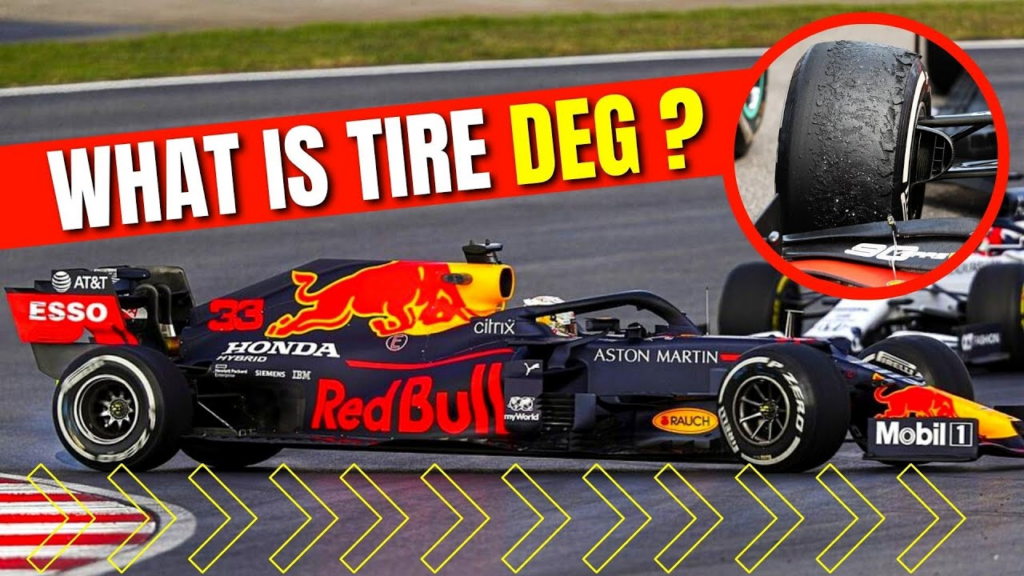
In F1, tires are among the most critical performance variables, often determining race outcomes as much as driver skill or car design. And if you want to bet on the most skilled drivers, you are invited to try the 1xBet app today.
Tire degradation, the gradual loss of grip and performance over time, is a complex scientific process driven by 3 aspects:
- physics;
- chemistry;
- and engineering trade-offs unique to the sport.
At its core, tire degradation results from the interaction between the tire’s rubber compound and the track surface. Formula 1 tires are made from carefully engineered blends of 4 ingredients: synthetic rubbers, natural rubber, oils and fillers. If you think you know when a driver is likely to change tires, use the app from 1xBet to bet on that moment.
These compounds are designed to operate within a narrow temperature window. When a tire is within this window, it provides maximum grip. Outside it, degradation accelerates. Excessive heat causes the rubber polymers to break down, a process known as thermal degradation, which reduces 2 things: elasticity and grip.
Mechanical degradation and graining
Mechanical degradation also plays a major role. As a car corners, accelerates, and brakes, the tire is subjected to shear forces that physically tear rubber from the surface. This is especially pronounced in high-speed corners and heavy braking zones, where lateral and longitudinal forces peak.
Another important phenomenon is graining. Graining occurs when the surface of the tire cools unevenly, causing small rubber particles to clump together instead of wearing away cleanly. These grains reduce the effective contact between tire and track, leading to a sudden drop in grip. Blistering, by contrast, is caused by excessive heat. Trapped gases beneath the tire surface expand, creating bubbles that rupture and leave behind damaged patches of rubber.
Other 2 elements that strongly influence degradation are car setup and driving style. Aerodynamic load increases the vertical force on the tires, improving grip but also increasing 2 aspects: stress and heat. Suspension geometry affects how evenly the tire load is distributed, while wheel alignment can cause localized overheating. Drivers who slide the car aggressively or lock up under braking generate more heat and wear, accelerating degradation.
Finally, strategic constraints amplify the importance of tire science. F1 tire suppliers deliberately design compounds that degrade at a controlled rate to encourage 2 aspects: pit stops and strategic variation. Teams must therefore manage tire life while maintaining competitive lap times, balancing pace against preservation.
Also Read:
- India Rocked It: Sachin, Sehwag Laud Men In Blue After Emphatic Win Over Pakistan In T20 World Cup

- T20 World Cup: Suryakumar Hails Ishan’s Responsible 77, Says India Were 15-20 Runs Above Par Against Pakistan
- IND vs PAK: Kishan’s 77 Powers India To 61-Run Win Over Pakistan In T20 World Cup
- IND vs PAK Clash Sees Pakistan’s 18-Over Spin Strategy Join T20 WC Record Books