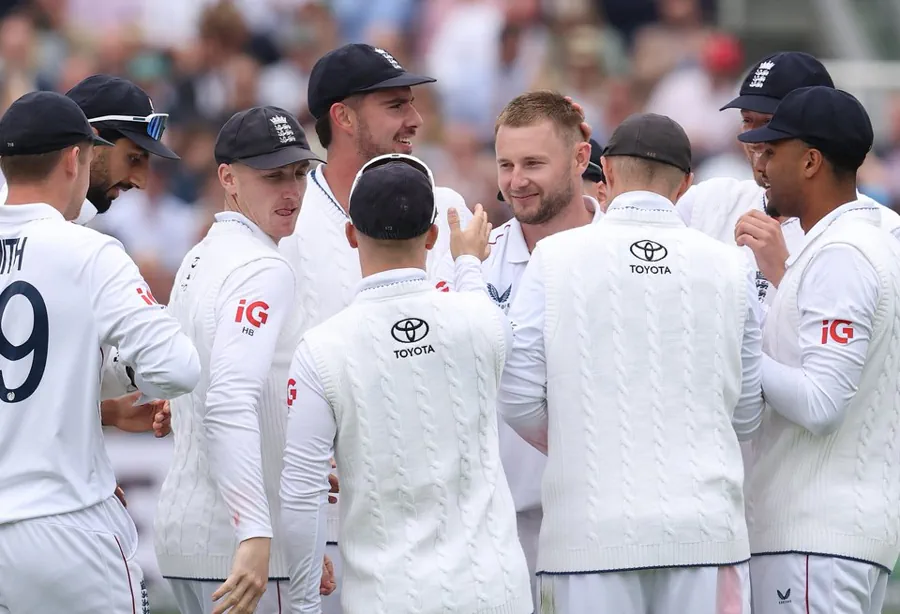
It’s been months since the Ashes wrapped up, but for many England fans, the sting has permeated. Going into a tour like that with such hope and belief for a system, only for that system to be catastrophically undone, is a wound that is likely to stay open for some time. But there are some things that the English test side can do to put things right, and that begins with a solid series against New Zealand.

The Upcoming NZ Series
First things first: New Zealand is no Australia. That’s not to say they’re a categorically ‘worse’ team, or that they don’t have the same abilities, but there’s a difference between a home series against NZ and an Ashes tour away against Australia.
Winning these tests won’t automatically erase the damage, but it will go some way in reassuring fans that the Bazball system still has merit. Going into the Ashes, many people – fans and sportsbooks alike – believed that Bazball was unbreakable.
Even puntit sports betting was pricing them favourably, and bearing in mind that India – and as such, Indian sports fans – have a fierce rivalry with England cricket, that says something! But it was a travesty from start to finish, with England completely outplayed and undone to the point where it looked like even an Under-11s side could outsmart them.
As a result, many were calling for McCullum’s dismissal from the coaching setup, but for better or for worse, the ECB have kept him on, and this is our chance to find out why.
If the system that was historically disassembled by Australia can rebuild and stand firm against NZ, then surely that says a lot about what Bazball actually is as a strategy, beyond the noise and slogans.
At its core, this shouldn’t be about aggressive shot-making or chasing quick run rates, as it was in Australia, it should be about sustained pressure on the opposition, where England tries to dictate tempo regardless of the match situation.
When it works, it should force bowlers into defensive lines, disrupt field settings, create scoring opportunities that wouldn’t normally exist in traditional Test cricket. It should reshape the rhythm of a game in a way that shakes the opposition, as that is a genuinely strong way to tilt control without necessarily dominating every session outright.
This is McCullum’s chance, then, to prove that England got it wrong in Australia, not that the system itself is fundamentally wrong.
The Future of Bazball
What happens next, then, will depend less on ideology and more on execution. If England start well and impose themselves early, Bazball will look at its best – confident and suffocating.
If they fall into the same traps as they did in Australia, however, the same questions that surfaced during the Ashes will return immediately – and this time, there probably won’t be any answering them.
Even if they fail against NZ and proceed to dominate in their next series, that’s twice that inconsistency has shown up under pressure, and twice is far too many in a format as unforgiving as Test Cricket.
The system might be good in theory, but things can be good in theory and still fail in practice if the opposition can consistently expose it.
This series will be the event to prove there’s something to hold onto, simply because NZ know what’s coming, and has prepared the tools to dismantle it just as Australia did. If the system can still stand up against a premeditated, focused attack, then that says something about its ultimate rigidity.
In other words, New Zealand is the grand test. Not as intimidating a test as the Ashes in Australia, but as it turns out, just as crucial to the future of England cricket.