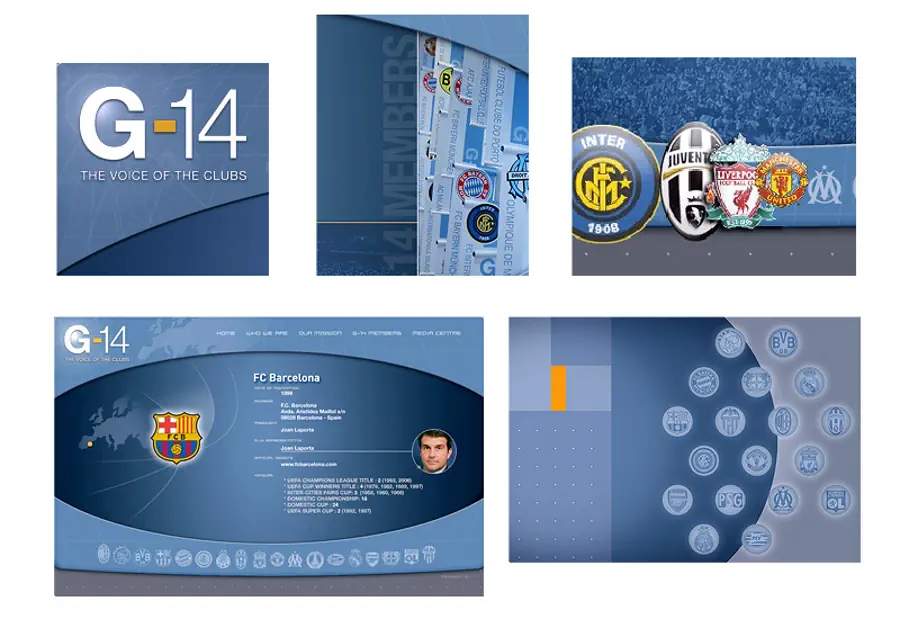
The G-14 was an influential organisation of Europe’s biggest football clubs that existed from 1998 to 2008. Created as a pressure group, it was formed by 14 of the continent’s most powerful teams with the aim of giving elite clubs a stronger collective voice in negotiations with entities like UEFA and FIFA. You can definitely explore the 1x platform to bet on tournaments organized by those 2 associations too.
The founding members represented some of the most successful and commercially powerful clubs in European football. They included Real Madrid, FC Barcelona, Manchester United, Liverpool FC, Bayern Munich, AC Milan, Juventus FC, Inter Milan, Paris Saint-Germain, Olympique de Marseille, Ajax, PSV Eindhoven and FC Porto. The group later expanded to 18 clubs in 2002 with the additions of:
- Arsenal FC;
- Bayer 04 Leverkusen;
- Olympique Lyonnais;
- and Valencia CF.
However, the original G-14 name was kept. By the way, 1xBet also has a ton of bets on all teams that were part of the G-14 too.
The goals of the group
The organisation’s main purpose was to protect the interests of top clubs in an increasingly commercialised football industry. The G-14 argued that the biggest clubs generated much of the revenue in European football. Therefore, they felt they deserved more influence over decisions involving competitions, television rights and financial matters. One of its major disputes concerned compensation for clubs when their players were injured or used in international matches for their national teams.
The G-14 also became associated with discussions about creating a possible breakaway European “super league”. This was a concept that worried UEFA because it threatened the traditional structure of European competitions. Although no such league was created by the group, its existence highlighted the growing power of wealthy clubs and the tensions between elite teams and football authorities.
Critics accused the G-14 of being an exclusive club that represented only the richest teams and ignored the interests of smaller clubs and national leagues. UEFA also encouraged broader representation through alternative structures, arguing that European football needed a more inclusive system.
In January 2008, the G-14 reached an agreement with FIFA and UEFA and agreed to dissolve. In return, clubs gained greater recognition in football’s decision-making processes. This also included arrangements for compensation related to players participating in international tournaments. The organisation was replaced by the European Club Association (ECA), a body designed to represent a much larger number of clubs across Europe.