Your team wins under a revised target. The scorecard shows the result. The match-winner bet settles.
Then the player-runs bet is voided.
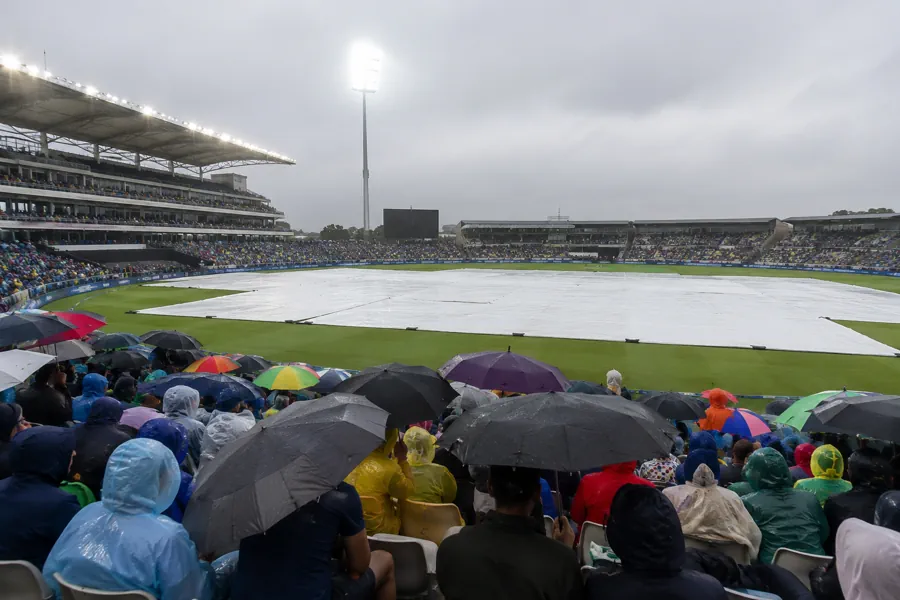
It looks inconsistent because both wagers came from the same game. Rain rules don’t work at match level alone, though. The official result and the settlement of each betting market are separate things.
That difference matters as soon as overs disappear.
DLS changes the target
The Duckworth-Lewis-Stern method (DLS) recalculates a target by looking at the batting resources available to each side, mainly overs remaining and wickets lost. It is used in interrupted limited-overs cricket.
It isn’t just a run-rate calculation. A team at 80 for one after 15 overs is in a different position from a team at 80 for six, even having used the same number of balls. DLS accounts for that difference.
The ICC uses DLS when rain or another interruption takes overs out of a limited-overs match. But there still has to be enough of the chase left to count. In an ODI, that usually means at least 20 overs. In a T20, it’s five.
If the second innings doesn’t reach that point, and the target hasn’t already been reached, the match may be recorded as no result.
The match-winner bet may still stand
Match betting is often the easiest part.
If the competition declares a winner under DLS, many sportsbooks settle the match-winner market on that official result. If no result is declared, those bets are usually voided.
So a team can win without completing the original 20 or 50 overs, and the basic match bet can still settle normally.
Other markets may not.
A handicap based on the full scheduled match, for example, may be voided after an overs reduction because the original conditions no longer exist. The winning team doesn’t automatically rescue every connected wager.
Each market has its own rain rule
Before using Bet Jordan or another trusted sportsbook during a match with dark clouds sitting over the ground, check the rule for the exact market rather than relying on the final scorecard.
Bookmakers often set minimum playing requirements for innings, over and player markets.
Some limited-overs innings markets require a set percentage of the original overs to remain available. Markets on a particular over usually need that over to be completed. Top batter, top bowler and most-boundaries bets may all use different thresholds.
That’s how one rain-shortened game can produce a settled match-winner bet, a voided innings-total wager and a valid first-over market.
It’s messy, but it isn’t random.
Some results are already decided
Rain doesn’t always void a shortened market.
Suppose you backed a batter to score over 30 runs. They reach 35 before the interruption. The market may still settle because the result can no longer change, even if the innings doesn’t resume.
The same logic may apply to an innings total that has already passed the quoted line or a team that has already exceeded the highest score range offered.
House rules often include wording such as “unless the result has already been determined.” That small clause matters quite a lot when the covers come on.
Abandoned and no result aren’t always the same
A match can be abandoned after enough cricket has been played for DLS to produce a winner.
In that case, play stopped because of the weather, but the official record still contains a result. Match-winner bets may settle on it.
If the match stops before the minimum number of overs, the official outcome may be no result. The main match market is then commonly voided, while events already completed may still count.
The toss happened. The first over finished. A batter may already have passed a quoted total.
Those things don’t disappear because the rain stayed.
The scorecard doesn’t settle every bet
The official result answers who won the match.
The sportsbook rules answer whether enough of each individual market survived to settle the wager. DLS, minimum-over thresholds and “result already determined” clauses all sit between those two answers.
The useful line is often buried halfway down the cricket rules, usually found just after the ground staff start dragging the covers back out.